
How to put lights on an indoor Christmas tree
Find out how to put lights on an indoor Christmas tree using a spiral or vertical arrangement, and how to choose the most suitable string lights.
Date
10.06.2026
Reading time
10 min
How to put lights on a Christmas tree
The lights should be arranged before the baubles and other decorations. This makes it easier to reach all the branches, hide the cable among the foliage and adjust any areas that are not well lit.
Before you begin, spread out the tree branches and check that the light string works. Locate the socket or power source, make sure the lead cable is long enough and unplug the lights while arranging them among the foliage.
You can choose from three methods: wrap the lights around the tree in a spiral, arrange them vertically or illuminate the tree branch by branch. Your choice will depend on how much time you have and the effect you want to achieve.
How to arrange lights in a spiral
The spiral arrangement is the most classic method. Start at the base of the tree, preferably on the side closest to the power socket, and wrap the light string around the foliage, gradually working your way up to the top.
Keep the spacing even between each turn and try not to leave overly bright areas next to darker ones. On a tall tree, it can be helpful to work in sections, completing one level of the foliage before moving on to the one above.
Do not leave all the lights on the outer surface: push some LEDs slightly deeper among the branches. Alternating between inner and outer lights adds greater depth to the foliage and makes the lighting look more natural.
For this type of arrangement, you can use standard string lights for the tree, choosing the length, cable colour and LED density according to the effect you want to create.

How to hang lights vertically
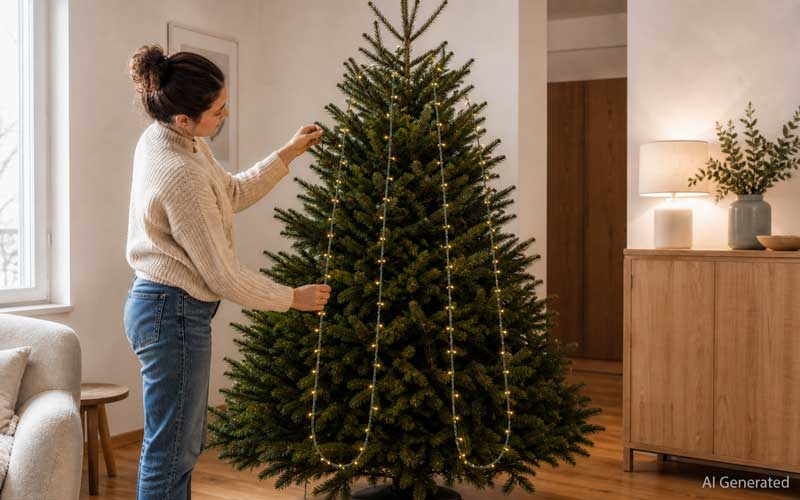
Hanging lights vertically allows you to distribute them evenly and is particularly practical for tall trees. Start at the top and run a section of the string down to the base; then bring it back up along the adjacent section and continue, alternating between downward and upward runs.
Keep the vertical runs as evenly spaced as possible. Before securing the string in place, look at the tree from a few steps away and adjust any areas where the lights are too close together or too far apart.
This method also makes it easier to remove the lights after the festive season, as you do not need to unwind the string from numerous loops around the tree.
How to put lights on the tree branch by branch
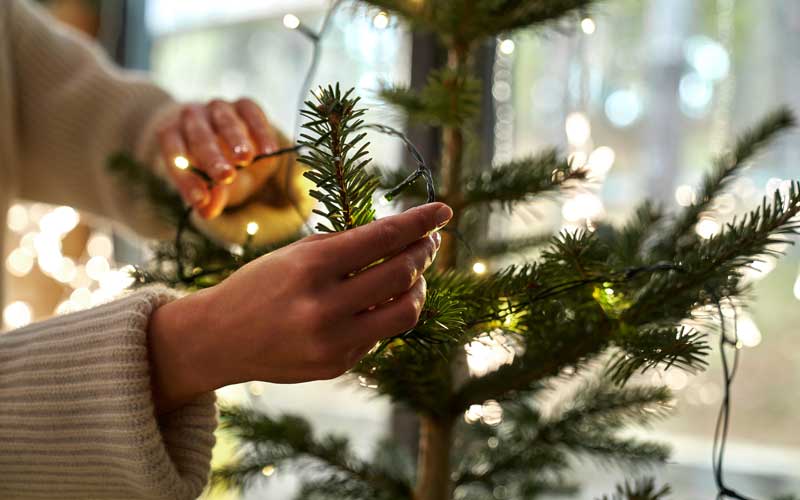
Arranging lights branch by branch takes more time, but creates rich, deep illumination. It is ideal when you want to enhance the tree’s structure and distribute points of light towards the inside of the foliage as well.
Start with the lowest branches and bring the light string close to the inside of the tree. Follow one branch from the base to the tip, return towards the trunk and then move on to the next branch. Work gradually upwards, taking care not to wrap the cable too tightly around the branches.
As you work, switch the lights on periodically to check the result, then unplug them again before repositioning the light string. Viewing the tree with the lights on allows you to immediately identify any empty or overly bright areas.
In short, a spiral arrangement creates the most traditional effect, a vertical arrangement is generally quicker, while the branch-by-branch method offers the fullest and most precise result.
Which lights to choose for an indoor Christmas tree
When choosing lights for an indoor tree, do not consider only the length of the light string. The size of the LEDs, the spacing between them and the colour of the cable also significantly affect the final result.
Large, clearly visible points of light create a more distinctive lighting effect, while small, closely spaced LEDs produce a finer pattern of light. Your choice also depends on how prominent you want the lights to be in relation to the baubles and other decorations.
LED, MiniLED or MicroLED?
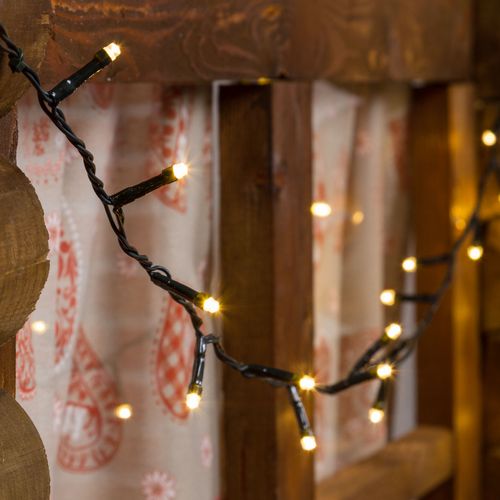
5-millimetre LEDs produce clearly visible points of light and are ideal for a classic-looking tree. A larger LED does not necessarily mean brighter light, but it does make each point of light stand out more clearly against the foliage.
3-millimetre MiniLEDs are smaller and more discreet. They illuminate the tree evenly without visually obscuring the ornaments, offering a good balance between the presence of the lights and the visibility of the decorations.
MicroLEDs measuring approximately 1.5 millimetres create lots of tiny points of light. The thin metal wire blends easily among the needles, creating an effect that is delicate yet full. You can explore the different Micro-LED Strings available to choose the light density, power supply and light colour.
Larger and more visible, they produce bright, well-defined light.

More discreet and numerous, they distribute light evenly.
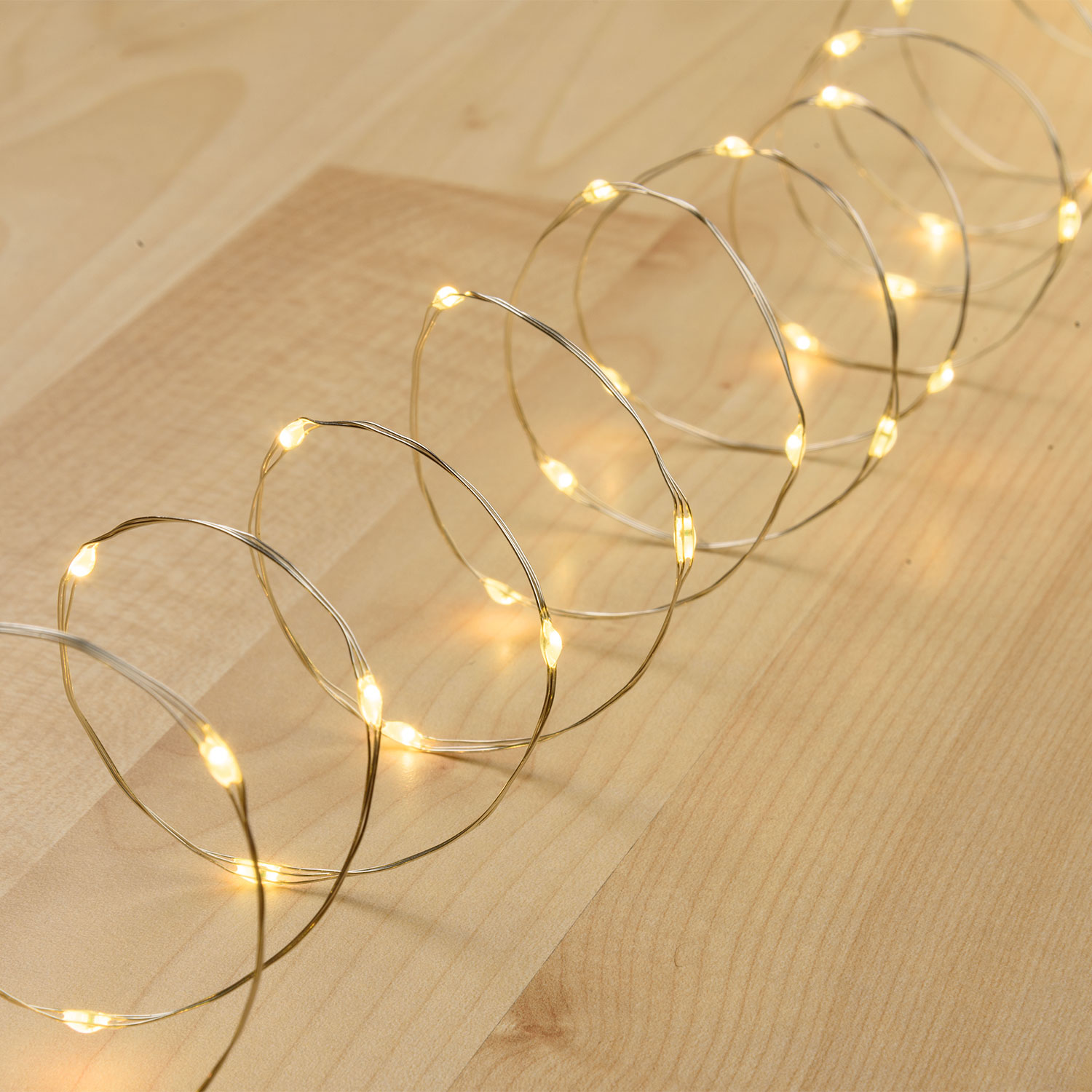
Tiny and set along a thin wire, they create a delicate lighting effect.
Light ribbons, garlands and tree light canopies
If you want to increase the light density, you can use a light ribbon, where the LEDs are positioned very close together to form a more compact line of light.
Light garlands and ribbons also add volume to the decoration. The light points are arranged around the central cable, creating a fuller effect than a traditional string of lights.
If you prefer a quick solution, you could opt for a tree light canopy. Its shape is designed to cover a conical tree and distribute the light points across it without having to wrap a long string of lights around it.
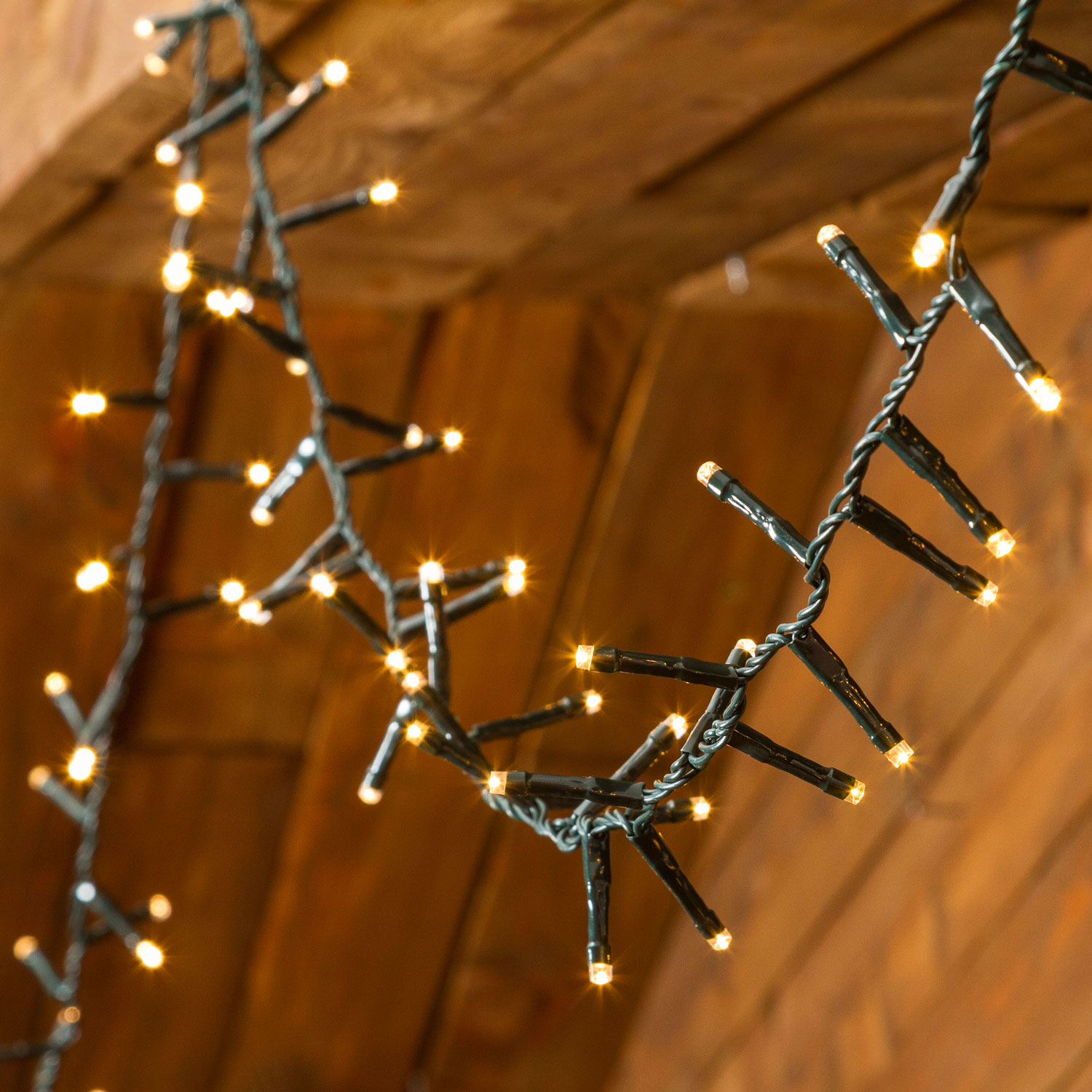
The closely spaced LEDs create a denser, fuller beam of light.
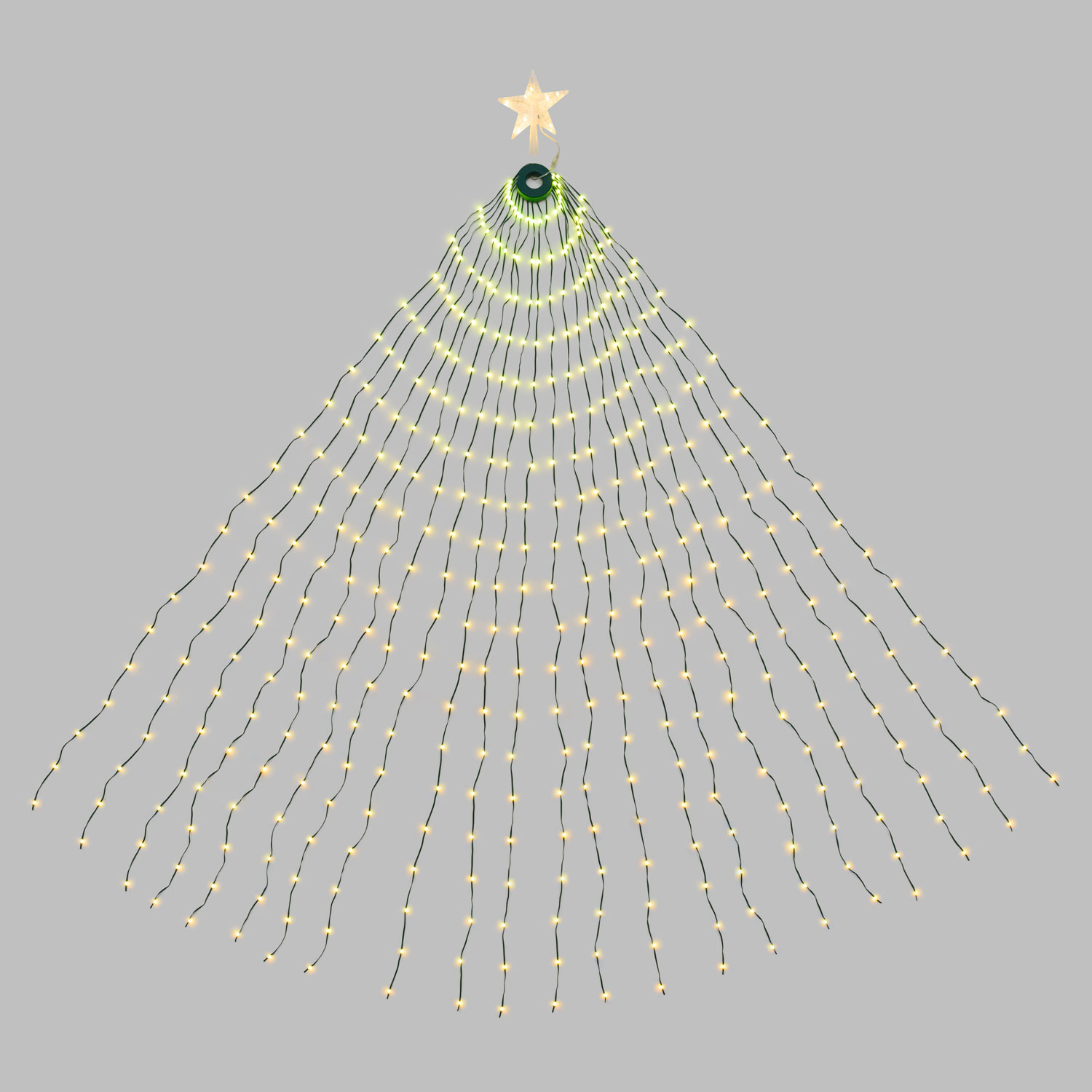
The light strands extend from a ring placed over the top and cascade down across the tree.
Green or clear cable?
For a green fir tree, a dark green cable is preferable, as it can easily be hidden among the needles. On a white, snow-covered or very light-coloured tree, a clear cable or a light-coloured one is generally less visible.
Also consider the colour of the light. Warm White creates a cosy, traditional atmosphere, while Cold White enhances white or silver trees and those with a contemporary style. Multicoloured lights, on the other hand, are ideal for a more vibrant and playful display.
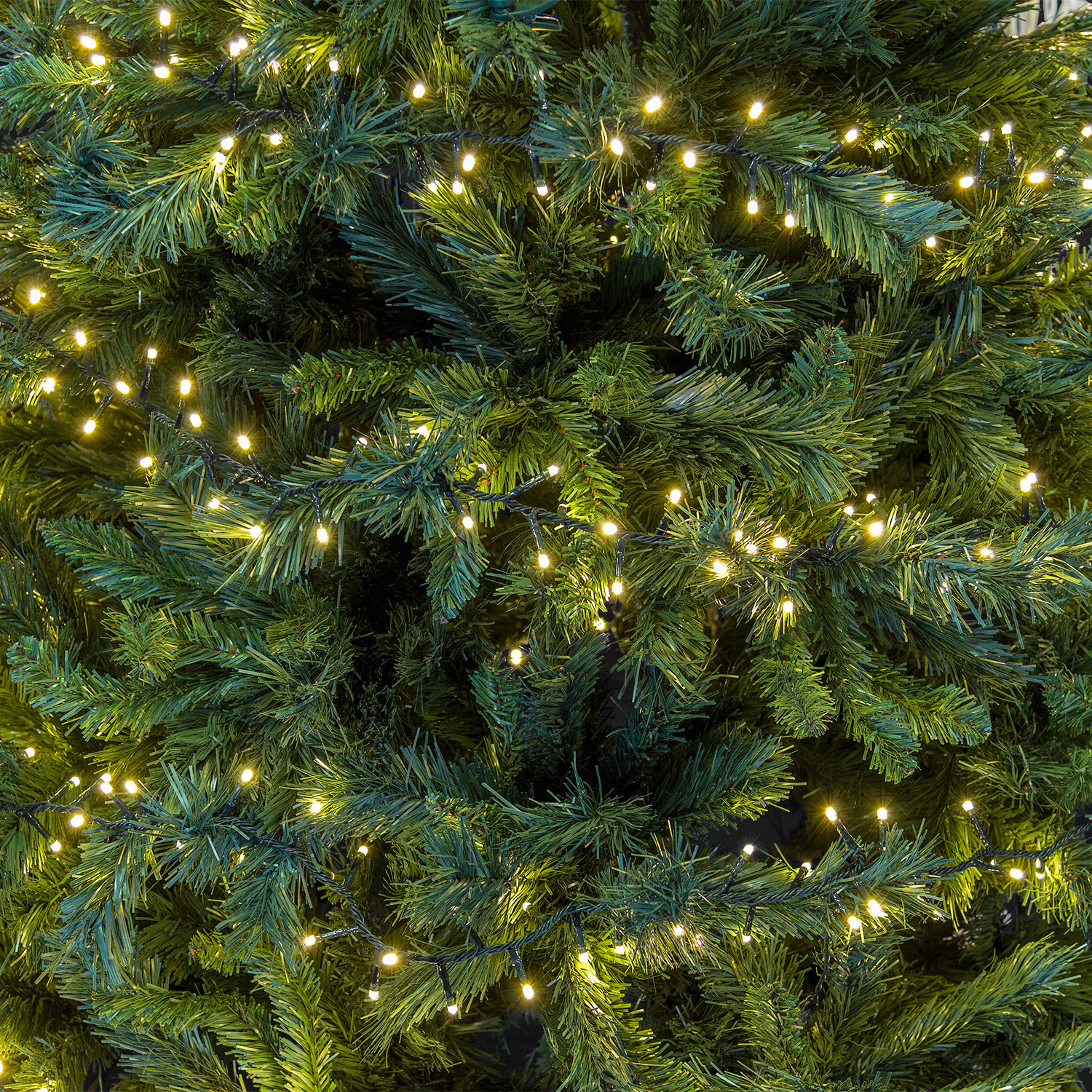
It blends in among the needles of green fir trees, allowing the points of light to stand out more.
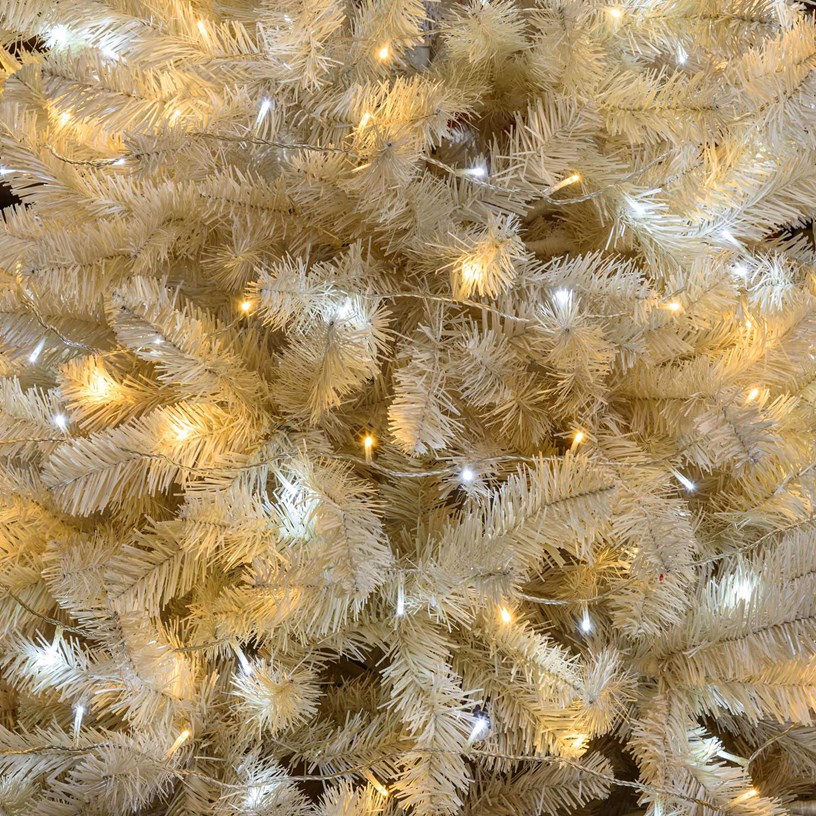
It is less visible on white or snow-covered trees and those featuring light shades.
Tips for distributing lights evenly
After arranging each section, switch on the light string and look at the tree from different angles. It is easier to spot empty areas from a few metres away than when working close to the foliage.
Arrange some of the lights towards the trunk and some on the tips of the branches. If all the LEDs remain around the outer edge, the tree may look flat; placing some lights further in adds depth.
Do not pull the cable too tight, and keep the power supply, controller and connections accessible. Always follow the instructions for the light string and, for this installation, use products specifically designed for Indoor Use.
The amount required depends on the height and width of the foliage and the desired light density. To calculate it, see our dedicated guide on how many metres of lights you need for your Christmas tree.
If you need to light up a fir tree or another plant in the garden, use products suitable for the setting and follow the tips in our guide on how to light an outdoor Christmas tree.
Once you have finished adding the lights, you can add baubles, bows and other elements, starting with the largest decorations. For new ways to combine them, take a look at our 18 ideas for decorating the Christmas tree.

Frequently asked questions
Here are the most frequently asked questions about how to put lights on a Christmas tree.
It is best to put the lights on first. With the branches still free, you can distribute the string lights more evenly, hide the cable and easily adjust any poorly lit areas. Baubles and other decorations can be added afterwards.
Hanging the lights vertically is generally the easiest method, both for arranging and removing them. Wrapping them in a spiral creates a more traditional look, while arranging them branch by branch takes longer but produces a particularly rich lighting effect.
Choose a cable that is close to the colour of the foliage and position it slightly inside the branches. For a green fir tree, a green cable is preferable; for white or snow-covered trees, consider a transparent or light-coloured cable.
There is no single length suitable for every tree: you need to consider its height and diameter, as well as your desired light density.
No, unless the product is expressly stated to be suitable for outdoor use. For a tree in the garden, choose string lights that are suitable for outdoor conditions and always check the information on the packaging or product page.
Have you found the method and effect you prefer? Discover all our Christmas lights and choose the best solution for your tree.