Animated Polar Stars
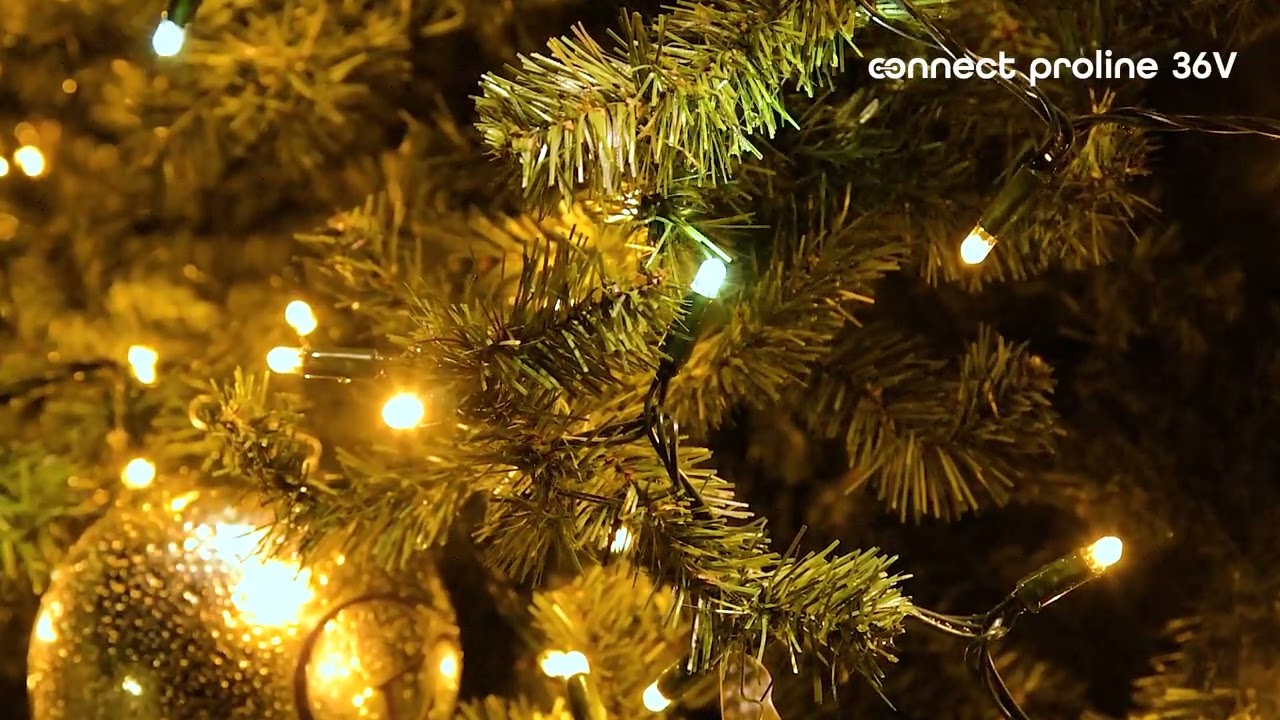
Animated light-up stars featuring the Star Explosion effect, designed to be placed among the branches to create more prominent sparkling points. They can be combined with other elements from the Connect ProLine 36V range.
Do you have a fir, pine or another tree in your garden? Find out how to hang lights on an outdoor Christmas tree and choose the arrangement best suited to its shape.
Date
03.08.2026
Reading time
12 min
Lighting a tree in the garden for Christmas means enhancing its shape even after sunset. Sometimes, simply tracing the outline of the canopy with string lights is enough; in other cases, it is more effective to outline the trunk and branches, hang cascading lights or add Figure Lights in the empty spaces.
The best solution depends mainly on the structure of the tree. A full fir tree offers plenty of anchor points, while a bare tree, a magnolia with large leaves or a tree with an umbrella-shaped canopy requires different techniques. The amount of cable needed, the accessories and the overall visual effect will also vary.
In this guide, we explore how to arrange lights on different types of trees, which products to choose for outdoor use and when to consider a professional range.
Before unrolling the string lights, look at the tree from a few metres away. Identify its overall shape, the most visible branches and the areas where the lights might be hidden.
The installation method should suit the tree: you can wrap the lights around the crown in a spiral, hang several string lights vertically, follow the trunk and branches, or use hanging lights and Figure Lights.
Before arranging the lights, bear in mind that branches move in the wind and that light strings, connectors and Extension cables serve an electrical purpose only. Electrical cables are never self-supporting and must not bear the weight of the installation or decorations.
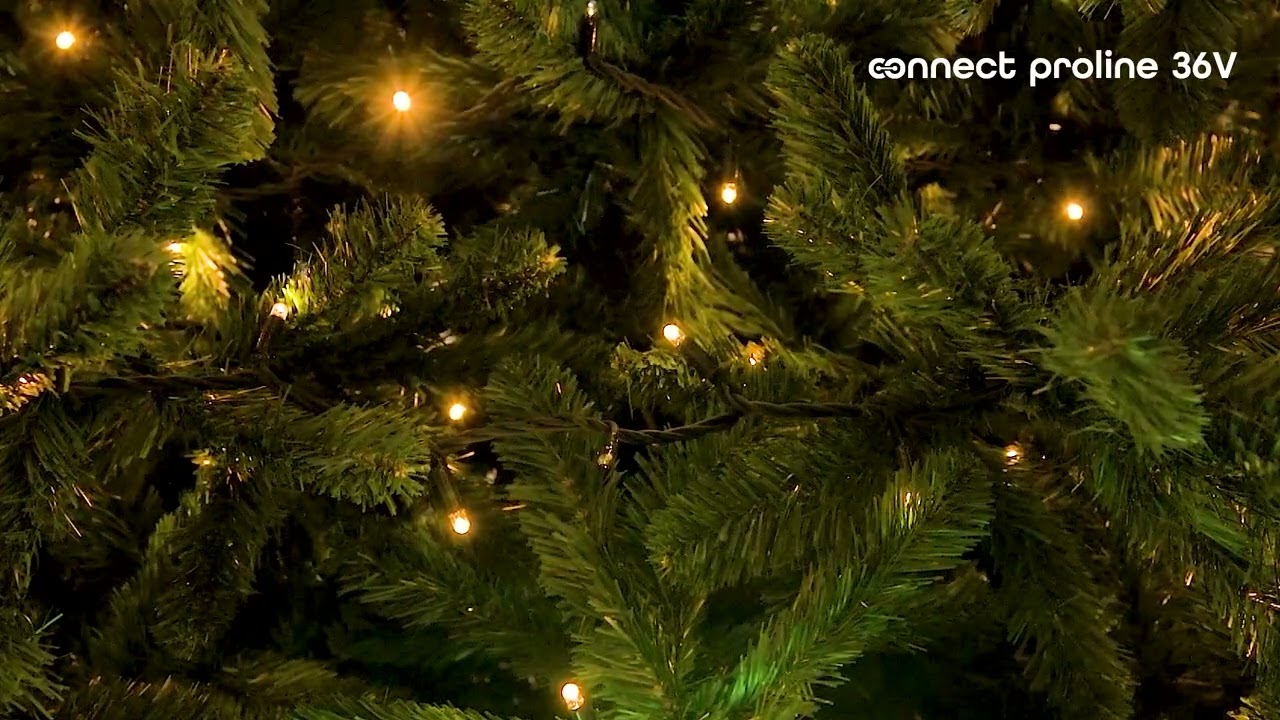
On a fir or pine tree with dense, generally conical foliage, the lights can be distributed throughout the tree. A spiral arrangement is the most traditional and attractive option, while a vertical arrangement is particularly practical for tall trees.
Wrap the string lights around the tree, working from the base towards the top and keeping the spacing between each turn as even as possible.
Avoid leaving all the lights on the surface: placing some slightly deeper within the foliage helps create depth, provided they remain visible between the branches.
Run several lengths of lights down from the top to the base, distributing them around the entire circumference. This arrangement makes it easy to keep the lighting even and, on large fir trees, may require less cable than a tightly spaced spiral.
For longer drops, use the independent support described in the general installation guidelines.
The different drops can start from a Multi-connector positioned near the top of the tree, provided the selected range supports this type of configuration.
Baubles, stars and other Figure Lights can be distributed among the branches to create larger points of light, enhance the display and break up the uniform pattern of the string lights.
To integrate them into the same system, choose Figure Lights from a modular professional range, preferably designed to connect to the same power supply as the string lights.
On a leafless tree, the trunk and branches become an integral part of the decoration. The classic spiral arrangement around the crown is not always possible because there are no dense branches or evenly distributed anchor points.
In this case, you can follow the structure of the tree itself or hang lights and Figure Lights in the open spaces between the branches.
Wrap the string lights around the trunk, then continue along the main branches. The branch-by-branch arrangement highlights the tree’s natural shape and creates a clearly defined light pattern.
Extension cables and Multi-connectors help split the route when the branches extend in different directions, avoiding repeated returns to the trunk.
Hang the hanging tree lights from the branches, alternating their lengths and heights. This allows the light to fill the empty spaces and adds volume to a crown that would otherwise appear very sparse without leaves.
The hanging lights can be used on their own or combined with string lights running along the trunk and branches.
When there are few anchor points, spheres, stars and other Figure Lights allow you to create larger decorative features without having to build up a dense web of string lights.
Distribute them evenly among the branches, leaving enough space for each figure to remain clearly recognisable.
Maritime pines, holm oaks, olive trees and other plants develop a broad canopy, especially at the top. In these cases, you can enhance both the tree’s structure and the space beneath it.
Broad-leaved plants, such as magnolias, present an additional challenge: string lights placed inside the canopy may be hidden by the large leaves. It is therefore best to position the lights in front of the foliage or in more open spaces, using larger light decorations.
Wrap string lights around the trunk and continue along the main branches where they remain visible.
You do not need to illuminate every branch: focusing on the main structural lines may be enough to bring out the shape of the tree.
Hang light decorations from the canopy at different heights. The suspended, almost waterfall-like effect highlights the umbrella shape and makes the space beneath the tree part of the display as well.
It is one of the most effective and contemporary ways to light a garden tree for Christmas.
On magnolias and other broad-leaved plants, spheres, stars and Figure Lights remain more visible than small lights placed throughout the canopy.
Position them in front of the leaves or hang them beneath the branches, arranging them in a few clearly visible, well-spaced spots rather than hiding a large number of string lights among the foliage.
A cone structure makes it possible to create a Christmas tree made entirely of light, even when no suitable tree is available. It can be installed in gardens, entrance areas, public squares and other outdoor spaces.
The string lights can outline the cone vertically or wrap around it in a spiral. Figure Lights and light decorations complete the display and make its shape more recognisable.
Gradually wrap the string lights around the structure, from the base to the top, keeping the spacing between each turn even.
A tighter spiral creates a full surface of light, while increasing the spacing gives you a lighter, more minimalist tree.
On a cone structure, a spiral arrangement is generally preferable because it distributes the string lights across the entire surface and prevents a large number of cables from converging at the top.
If you still want to create vertical lines, divide the cone conceptually into two horizontal sections and arrange the string lights separately across the upper and lower sections. In the first section, the lines can run down from the top towards the middle; in the second, they can continue from the middle towards the base.
This configuration keeps the spacing between the lines even and makes the cone shape clearly visible from every angle, without concentrating all the cables and connections at the top.
Complete the structure by placing spheres, stars or other Figure Lights between the lines of light. Larger decorations break up the regular pattern of the string lights and give the tree a richer look, even without real foliage.
When lighting a tree in the garden, choosing the light colour or number of LEDs is not enough. The lights must be suitable for outdoor use and appropriate for the size of the tree, its exposure to the elements, how long the display will remain in place and the chosen installation method.
Before purchasing, also check the route between the power source and the tree. Calculating distances, branches and the areas to be illuminated in advance will help you choose the right string lights, Extension cables and accessories, avoiding connections in hard-to-reach places.
Check the product data sheet for the intended use and the IP rating of the lights, cables, connectors and power supply, if applicable. Always follow the instructions for your chosen product range and do not connect products from different systems to one another.
For a seasonal installation in a sheltered garden, a standard outdoor product range may be sufficient. If the tree is highly exposed, located in a coastal or mountain area, or needs to remain illuminated for an extended period, the next step explains when it is best to choose a professional product range.
Modular string lights allow you to connect multiple segments until you reach the required length. They are particularly practical for large trees, as you can expand the lighting system, divide it into multiple runs and replace a single section without having to remove the entire installation.
Before adding new segments, always check the maximum connectable length and the number of elements permitted for the series you are using.
Extension cables allow you to span the section between the power supply and the canopy without lights, or to reach distant branches. Multi-connectors split the system in multiple directions and are useful when you want to follow the trunk and branches or create several vertical drops.
On a bare or irregularly shaped tree, planning the branching paths before installation prevents you from covering the same branches several times and ensures a tidier distribution of the lights.
The number of lights you need does not depend on height alone. You also need to consider the width of the canopy, your desired light density and the installation method: a tightly wound spiral requires more metres of lights than a vertical arrangement with several drops.
On very large trees, you can increase the spacing between each loop while still achieving a balanced result. For a more accurate estimate, read our dedicated guide on how many lights you need for a Christmas tree.
Not every tree in the garden requires a professional lighting system. For a small or medium-sized tree and a seasonal display, a modular outdoor range may be sufficient. However, as the height, installation duration, exposure and number of branches increase, it is worth considering professional Christmas lights.
The choice does not depend solely on the number of LEDs. Also consider the maximum connectable length, the type of power supply, the availability of Extension cables and Multi-connectors, and the option to expand or reuse the system. Components from different ranges must not be combined unless expressly permitted by the manufacturer.
A professional solution is particularly suitable when:
For a smaller tree or a temporary display, you can choose a standard range instead, always checking its suitability for outdoor use and the connection limits stated on the product pages.
If you are unsure which solution to choose, learn more about the differences between professional and budget outdoor Christmas lights.
The four product families meet different needs, from modular solutions for private gardens to professional installations and programmable lighting displays.
In the next step, we’ll look at how to choose between steady light, sparkling effects, gentle pulses and programmable animations, as well as how to add Figure Lights among the branches.
Once you have decided how to arrange the lights, how many to use and which range to choose, you can focus on the final effect. Steady light remains the most uniform and understated option, while strings with dynamic lighting effects can add movement to the display.
Alternatively, you can use steady-light strings as a base and add a few animated Figure Lights among the branches. This keeps the overall lighting uniform, while stars, baubles or other decorations add movement only to selected areas of the tree.
On some trees, adding more light strings does not necessarily produce a better result. Figure Lights and hanging lights can make trees with sparse branches, an irregular canopy or very large leaves more visible and eye-catching.
The effect should suit the size of the tree and the atmosphere you want to create. For a very large tree, choose animations that are noticeable enough to be seen from a distance. Slow, gradual movements create a more delicate result, while fast, frequent sequences make the display livelier and more dynamic.
Only some of the LEDs emit brief flashes, while the others remain steadily lit. The result is a subtle, evenly distributed sparkle that adds movement without altering the tree’s base lighting.
The brightness gradually increases and decreases, creating a soft, continuous pulsing effect. It is more subtle than traditional flashing and ideal when you want an elegant, relaxing effect.
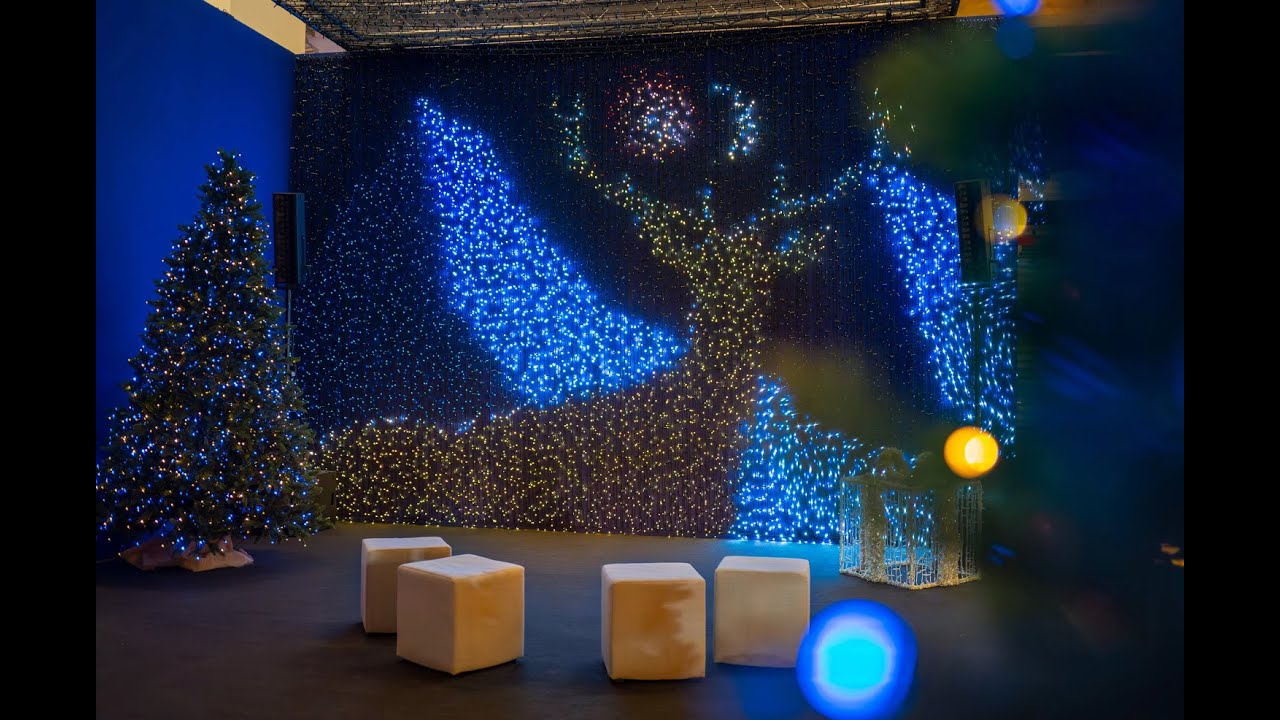
With Twinkly Pro, you can manage colours, animations and lighting sequences, coordinating every point of light across the entire tree. It is the ideal choice for large trees, professional installations and displays where light needs to become a truly spectacular feature.
Figure Lights are particularly effective on trees with sparse foliage, where there are few places to secure a light string evenly in a spiral. They create larger points of light and help visually fill empty spaces without requiring many metres of additional cable.
They are also useful on broad-leaved plants, such as magnolias. In these cases, light strings tend to slip towards the inside of the foliage and may be hidden by the leaves, whereas a Figure Light placed near the outer part of the branches remains clearly visible.
For a balanced result, arrange a small number of Figure Lights proportionate to the size of the plant and make sure that the products, cables and accessories all belong to the same range.
Animated light-up stars featuring the Star Explosion effect, designed to be placed among the branches to create more prominent sparkling points. They can be combined with other elements from the Connect ProLine 36V range.
Light-up balls designed to hang from the branches, with selectable colours and effects. They add depth and volume thanks to points of light that are larger than those created by string lights alone.
Hanging tree lights make the most of the natural shape of trees with a broad, horizontal canopy. The strands hang from the ends of the branches, creating a Waterfall of light that is clearly visible even beneath the canopy: a particularly effective solution for olive trees, maritime pines and umbrella-shaped trees.
They can also be used on bare trees, allowing the hanging strands to follow or weave through the branches. Compared to a spiral arrangement, they require fewer support points and highlight the structure of the tree rather than attempting to recreate a canopy that is not there.
When it comes to lighting a tree in the garden, there is no single arrangement that suits every tree. First, look at the shape of the canopy and identify the branches you want to highlight. Then choose lights suitable for outdoor use, plan the power supply and connections, and decide whether to complete the display with Figure Lights or hanging elements.
Before starting the installation, test all the components on the ground and mentally divide the tree into several zones. By working one section at a time, it will be easier to maintain an even distribution, fill in any gaps and achieve a balanced result, even when the tree is viewed from different parts of the garden.
Start with the shape of the tree. On a fir tree, you can arrange the lights in a spiral or vertically; on a bare tree, it is best to follow the trunk and branches; hanging lights work well on trees with broad or umbrella-shaped canopies. Figure Lights and light spheres can fill empty spaces or remain more visible among large leaves.
Suitability for outdoor use is the first requirement, but it is not enough to ensure you choose the right lights. You should also consider the size and shape of the tree, the installation method, the amount of cable required, exposure to wind and bad weather, and how long the installation will remain in place.
For a small or medium-sized tree and a seasonal display, a modular outdoor range may be sufficient. For very large trees, long-term installations or particularly exposed locations, it is advisable to consider a professional range, which is better suited to handling many metres of lights, branches and accessories.
Finally, check the IP rating, the maximum connectable length and compatibility between string lights, Figure Lights, Extension cables, power supplies and Multi-connectors. Components from different ranges must not be connected unless the manufacturer expressly states that they are compatible.

A spiral arrangement follows the outline of the canopy and creates an enveloping effect. A vertical arrangement makes it easier to distribute the hanging strands from the top to the base and simplifies their subsequent removal. Both methods work well on a conical fir tree; the choice depends on the desired effect and the number of string lights available.
Use reusable clips or cable ties suitable for outdoor use and do not overtighten them. Avoid fastenings that could cut into the bark or compress the branches, and leave a little slack in the cable, especially in areas exposed to the wind.
Only if all components are certified as suitable for outdoor use and are installed according to the instructions on their respective product pages. Keep connections and power supplies in the conditions specified by the manufacturer, and always disconnect the system before working on the cables or changing the display.